Modern global supply chains operate in an environment defined by market volatility, tighter regulatory requirements, and high transaction volumes. For mid-market and large enterprises, managing hundreds or thousands of suppliers across disparate tools, unlinked spreadsheets, and manual email chains leads to operational friction, compliance liabilities, and runaway procurement costs.
Legacy enterprise systems like traditional Enterprise Resource Planning (ERP) databases or standalone Vendor Management Systems (VMS) frequently function as passive digital file cabinets. They record transactions after the fact, but they lack predictive capability, automated compliance workflows, and real-time operational transparency.
g-procurenet, deployed as a foundational component within the g-axis AI suite, represents an architectural leap beyond conventional vendor record-keeping. By blending native AI intelligence, automated end-to-end procurement workflows, and real-time analytics into a unified ecosystem, g-procurenet turns supply chain operations from a reactive cost center into an agile, data-driven engine.
1. The Operational Crisis in Modern Vendor Management
Before examining modern architectural solutions, it is critical to diagnose why conventional vendor management workflows break down at scale. Enterprise procurement faces challenges across several structural areas:
Siloed Data Repositories
Organizations often maintain vendor data across different departmental applications. The accounts payable team uses one billing tool, the legal department handles Master Service Agreements (MSAs) inside local folders or document vaults, and procurement managers keep supplier metrics in localized spreadsheets. This fragmentation creates data discrepancies, duplicate supplier profiles, and blind spots regarding total spend.
Manual, Time-Intensive Onboarding
Onboarding a single enterprise vendor traditionally demands dozens of back-and-forth interactions:
- Collecting business licenses, GST/tax registrations, and bank details.
- Verifying compliance with national and regional trade regulations.
- Routing Non-Disclosure Agreements (NDAs) and custom supplier contracts for sign-offs.
When these operations rely on manual verification, onboarding timelines drag on for weeks. This delays project kickoff times and strains supplier relationships from the outset.
Vulnerability to Risk and Non-Compliance
Supply chain vulnerabilities extend beyond delivery delays. Regulatory frameworks (such as ISO certifications, ESG mandates, anti-bribery policies, and data protection rules) require continuous monitoring. When compliance tracking is manual, organizations rarely discover an expired vendor certification or a lapse in liability insurance until a breach or audit occurs.
Maverick Spend and Uncontrolled Purchasing
Without an interconnected procurement engine, departments frequently engage in off-contract purchasing—commonly known as “maverick spend.” When team leads source external services or materials outside negotiated supplier agreements, the organization loses volume discounting, bypasses budget approvals, and faces unverified financial liability.
Invoicing Discrepancies and Three-Way Match Delays
Matching the Purchase Order (PO), Goods Receipt Note (GRN), and vendor invoice manually remains one of the largest resource drains on finance departments. Minor discrepancies in line-item quantities, tax rates, or delivery terms trigger extended dispute cycles, late payment penalties, and damaged supplier goodwill.
2. Introducing g-procurenet Within the g-axis AI Suite
To solve these persistent operational bottlenecks, modern enterprises require an active operational fabric rather than a static database. g-procurenet is purpose-built to deliver complete visibility across the full vendor lifecycle.
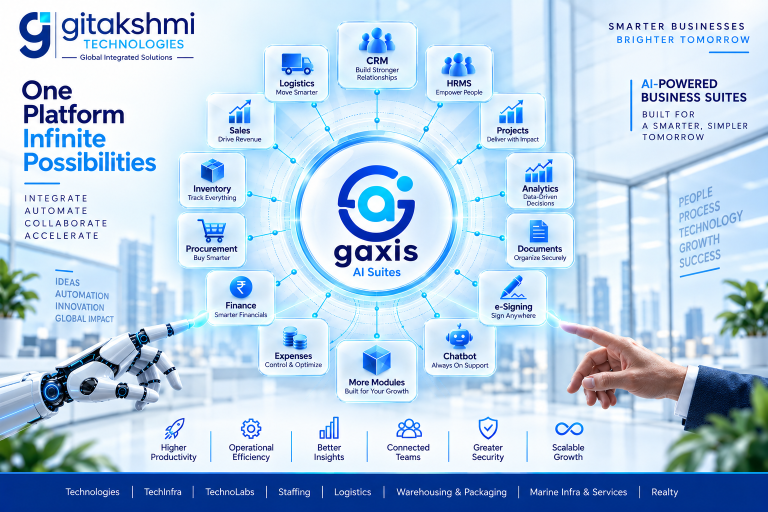
Operating under the g-axis AI suite, g-procurenet does not run as an isolated procurement plugin. Instead, it integrates directly with the broader operational matrix—unifying core ERP modules, Human Resource Management Systems (HRMS), inventory tracking, and project delivery pipelines.
The Architectural Advantage of g-axis AI Integration
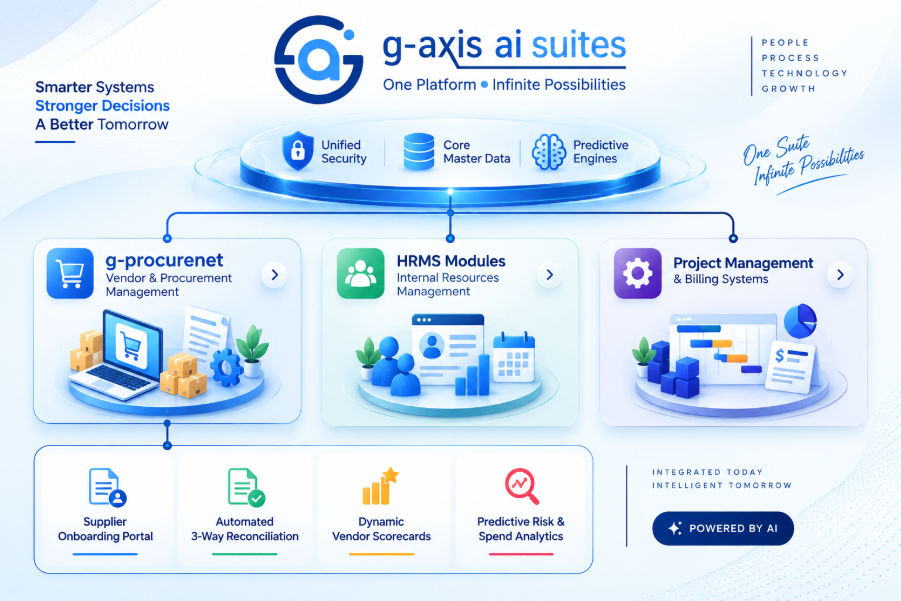
- Unified Identity and Security Layer: Single Sign-On (SSO) protocols, role-based access control (RBAC), and strict permission hierarchies ensure that suppliers, procurement executives, and finance directors see only the data relevant to their authorization tier.
- Context-Aware Business Logic: Because g-procurenet shares context with other enterprise modules, purchase requests automatically map against real-time project budgets, resource milestones, and enterprise burn rates.
- Continuous Algorithmic Auditing: The underlying AI engines continuously review purchase patterns, invoice submission intervals, and delivery times to flag anomalies before financial approvals occur.
3. Core Functional Pillars of g-procurenet
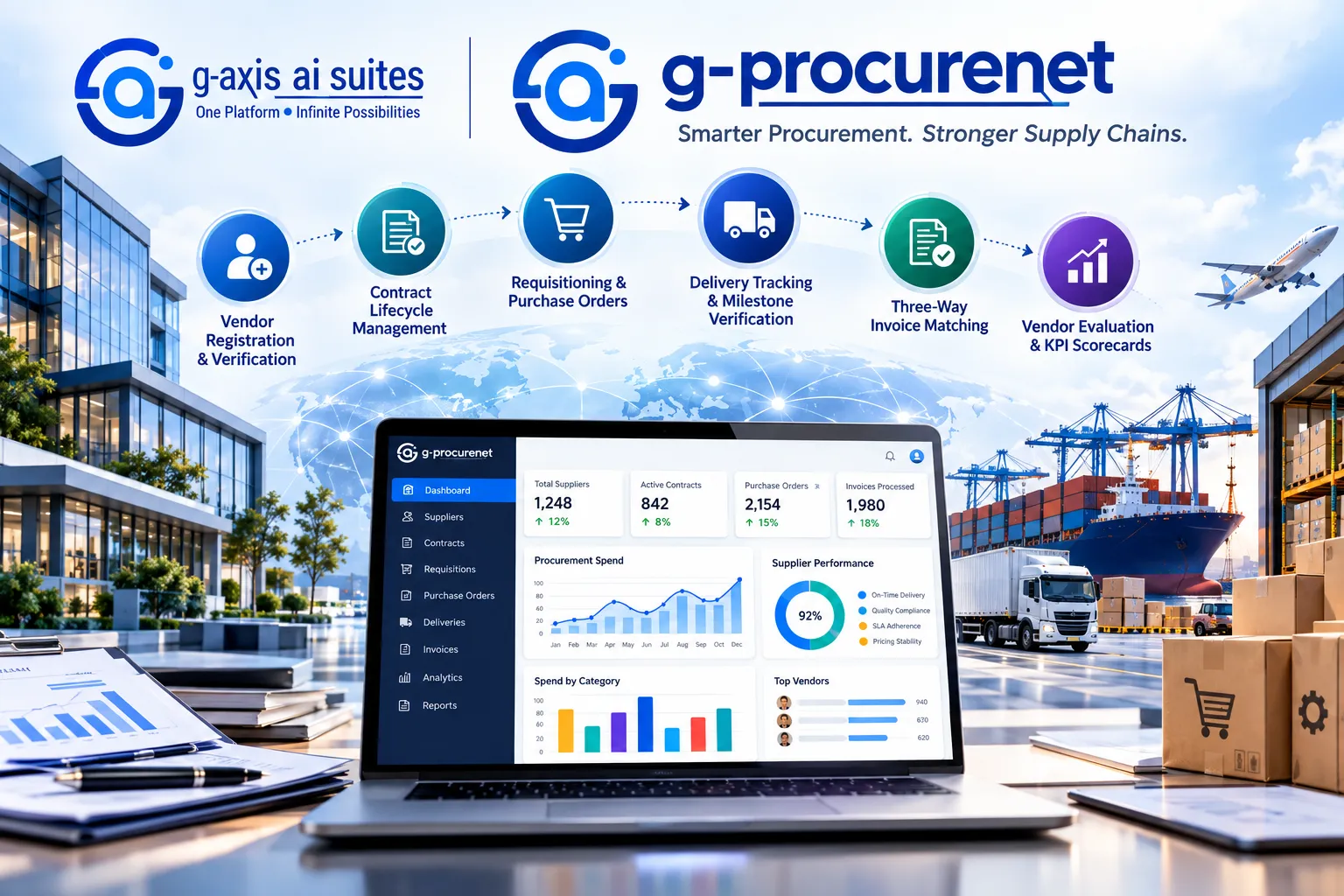
g-procurenet organizes complex enterprise procurement operations into six interconnected operational modules.
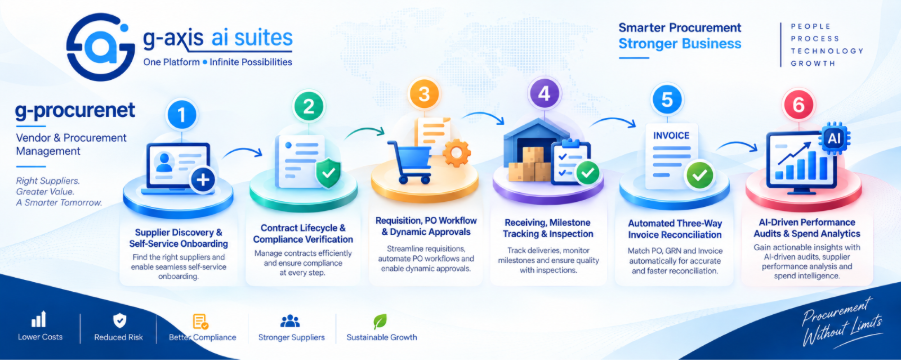
Pillar 1: Self-Service Vendor Registration and Automated Verification
g-procurenet removes manual administrative friction by shifting onboarding directly to a dedicated, branded supplier portal. Prospective vendors input corporate data, upload banking confirmations, submit tax documentation, and accept standard codes of conduct digitally.
- Automated Data Validation: Optical Character Recognition (OCR) engines and backend validation rules immediately parse submitted documents, confirming business identity numbers, tax IDs, and bank account parameters without requiring administrative data entry.
- Granular Vendor Categorization: Vendors are categorized by domain, capability, geographic operational zones, risk profiles, and tier rankings. This ensures clean, searchable master data from day one.
Pillar 2: Dynamic Contract Lifecycle Management (CLM)
Contracts should never be passive PDF files stored on local systems. g-procurenet treats contracts as active, measurable agreements:
- Template Standardization: Standardized legal clauses, confidentiality terms, and delivery SLAs are populated dynamically from pre-approved internal templates.
- Milestone-Triggered Obligations: Terms within the contract link directly to delivery triggers. For example, if a software implementation vendor requires sign-off on Phase 1 deliverables, the platform prevents subsequent work orders or milestone payments until the verification sign-off is logged in the system.
- Automated Renewal & Expiry Alerts: The system monitors expiration dates for master agreements, business licenses, and liability policies, giving internal teams 30-, 60-, and 90-day heads-up alerts.
Pillar 3: Requisitioning and Intelligent Purchase Order Workflows
Internal requisition processes often stall in lengthy email approval chains. g-procurenet standardizes this lifecycle with programmable business rules:
- Catalog-Driven Requisitions: Internal team members select materials, recurring services, or enterprise software tools from pre-negotiated digital catalogs with fixed pricing tiers.
- Dynamic Approval Hierarchies: Purchase requests route automatically based on department, monetary threshold, project scope, and variance from budget. A $500 office supply request can clear via automated manager approval, while a $250,000 capital equipment order routes sequentially through department heads, finance controllers, and executive management.
- Automated PO Dispatch: Once approved, PO documents are generated and transmitted directly to the vendor’s dashboard and registered communication endpoints, eliminating manual paperwork.
Pillar 4: Delivery Tracking, Goods Receipt, and Milestone Verification
Transparency during fulfillment is essential to avoid project stalls:
- Material Deliveries: Warehouse teams log incoming shipments using integrated Goods Receipt Notes (GRN). They record delivered counts, inspect for damaged units, and flag partial deliveries directly against the open line items of the active PO.
- Service Milestones: For service-based contracts (such as IT consulting, engineering, or facilities maintenance), project managers review deliverable documentation and approve digital timesheets or milestone completion certificates directly inside the platform.
Pillar 5: Automated Three-Way Invoice Matching
Reconciliation delays strain accounts payable teams and harm supplier relationships. g-procurenet automates this process through systematic verification:
| Verification Stage | Data Source | Validated Parameters |
| Stage 1: Purchase Order | Issued Procurement Document | Unit prices, agreed payment terms, authorized line-item quantities. |
| Stage 2: Receipt Verification | Goods Receipt Note (GRN) / Milestone Sign-Off | Physical units received, quality inspection clearance, signed acceptance. |
| Stage 3: Vendor Invoice | Supplier Submitted Bill | Billed line items, applied tax codes, discounts, total invoice amount. |
When all three documents align within configured tolerance limits (such as minor rounding variations), the system flags the invoice for automated payment processing. If a mismatch occurs—such as a price hike or billed quantities exceeding received quantities—the platform places a hold on the invoice line item and routes an alert directly to the designated procurement officer for resolution.
Pillar 6: Continuous Vendor Evaluation and KPI Scorecards
Selecting the right partner for future projects requires clear visibility into historical performance. g-procurenet maintains rolling, multi-dimensional supplier scorecards:
- On-Time In-Full (OTIF) Rate: The percentage of orders delivered within committed delivery windows without quantity shortfalls.
- Quality Compliance Ratio: The rate of accepted materials versus items rejected during quality inspection.
- Pricing Stability Index: Tracking price variances, spot-purchase surcharges, and adherence to negotiated contract terms over rolling 12-month periods.
- Responsiveness & SLA Adherence: Measuring support response times, issue resolution speed, and contract milestone delivery.
4. The g-axis AI Edge: Transforming Data Into Strategic Value
What distinguishes g-procurenet from legacy procurement portals is its tight integration with the g-axis AI suite. Where standard platforms record transactions, g-axis AI brings active intelligence and predictive automation directly to the supply chain.
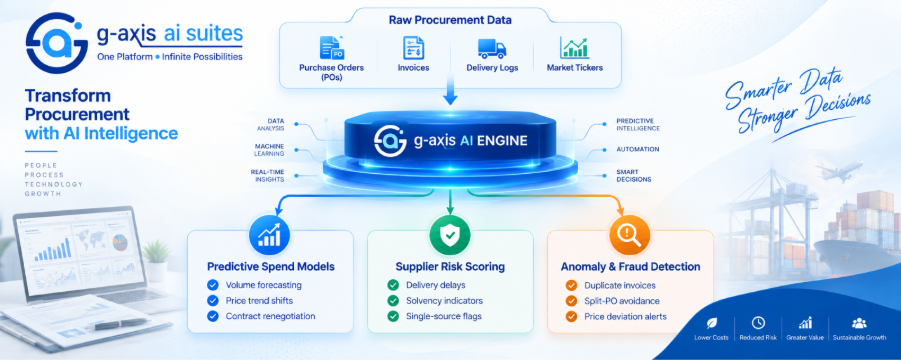
1. Anomaly and Fraud Detection in Accounts Payable
Accounts payable fraud and billing errors cost enterprises millions annually. g-axis AI algorithms run continuous audits across every transaction:
- Split-PO Identification: Detects patterns where multiple purchase orders are intentionally generated just beneath an employee’s approval threshold to bypass managerial oversight.
- Duplicate Invoice Identification: Evaluates submitted invoices not only by invoice number, but through phonetic matching, line-item similarity analysis, and date clustering to prevent duplicate payments.
- Phantom Vendor Detection: Cross-references supplier bank details, physical addresses, and tax identifiers against employee records to flag potential internal collusion or shell company registrations.
2. Predictive Risk Modeling and Supplier Resilience
Supply chain interruptions can halt production lines. Rather than waiting for a supplier to default on an order, g-axis AI evaluates leading indicators:
- Historical Trend Shifts: Identifies gradual declines in a supplier’s delivery timelines or minor quality slips that often precede major operational failures.
- Concentration Risk Analysis: Warns procurement leaders when an enterprise relies too heavily on a single vendor or narrow geographic region for mission-critical components, recommending diversification strategies.
- Macro & Market Factor Ingestion: Analyzes external market data, raw material price shifts, and logistics indices to forecast cost impacts and supply shortages before they hit production.
3. Smart Contract Intelligence and Spend Optimization
The g-axis AI suite continuously parses procurement history to uncover hidden cost-saving opportunities:
- Consolidated Purchasing Recommendations: If three different business units independently purchase the same industrial supplies from different vendors, g-axis AI flags the pattern and recommends negotiating an enterprise-wide master agreement for volume discounts.
- Renegotiation Triggers: When a vendor’s rolling scorecard consistently hits top marks, the platform prompts procurement teams with data-backed targets for long-term contract discounts or early payment incentives.
5. Enterprise Architecture and Seamless Integration
Enterprise software cannot live in an isolated silo. To provide true operational value, g-procurenet is architected for clean integration within complex, multi-tiered IT ecosystems.
Architectural Highlights
- High-Throughput API Framework: Built using modern backend architecture (Node.js, Express, and high-performance relational/NoSQL document stores), the platform handles high-concurrency operations during peak procurement cycles without performance degradation.
- Enterprise ERP Interoperability: Clean REST and GraphQL interfaces allow bi-directional synchronization with existing enterprise databases (including SAP, Microsoft Dynamics, NetSuite, and custom accounting engines). Master item catalogs, chart-of-accounts allocations, and payment clearing files exchange automatically.
- End-to-End Encryption and Audit Integrity: All document uploads, financial identifiers, and contract negotiations are encrypted in transit via TLS 1.3 and at rest via AES-256 standards. Immutable change logs record every action, edit, and approval, giving internal auditors full forensic traceability.
6. Real-World Business Impact: Measurable ROI
Deploying an integrated system like g-procurenet delivers clear, quantifiable improvements across key business metrics:
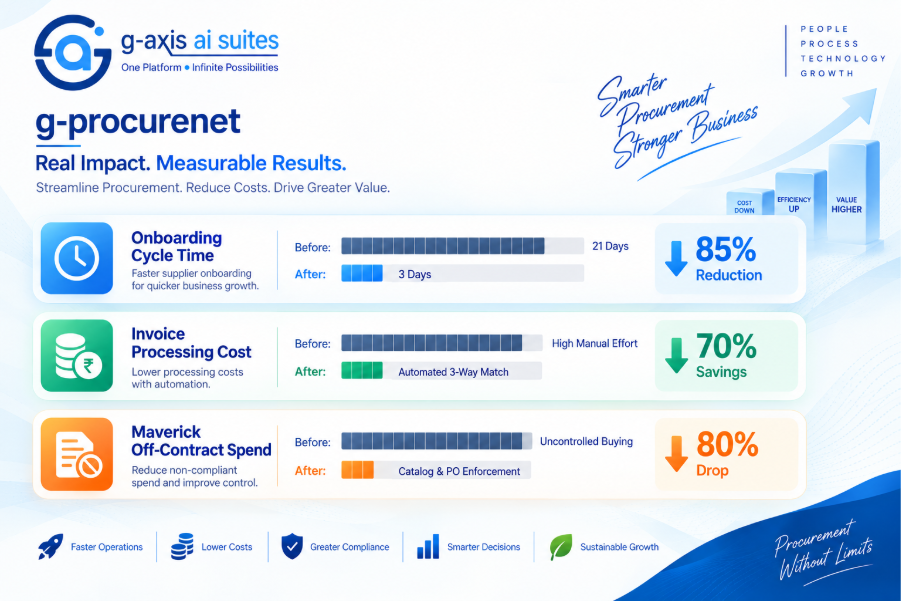
1. Accelerated Onboarding Cycles
By transitioning from manual document verification to self-service portals with automated validation, enterprises reduce supplier onboarding cycle times from an industry average of 20 to 25 business days down to under 72 hours.
2. Lower Operational Processing Costs
Manual invoice processing typically costs organizations between $12 and $20 per invoice when accounting for staff hours, dispute resolution, and paper processing. Through automated three-way matching, g-procurenet lowers processing costs by 60% to 75%, freeing accounts payable teams to focus on liquidity planning and strategic financial management.
3. Eradication of Maverick Spend
By requiring purchase requisitions through pre-negotiated digital catalogs with fixed approval thresholds, organizations capture up to 10% to 15% in overall spend savings through guaranteed volume pricing, eliminating unapproved off-contract purchasing.
4. Improved Supplier Relationships and Tier-1 Collaboration
Suppliers gain continuous visibility into PO confirmations, delivery acceptances, and invoice approval statuses through their self-service portal. Eliminating billing confusion and establishing predictable payment timelines positions the enterprise as a preferred customer, improving vendor support during supply constraints.
7. Strategic Implementation Roadmap
Rolling out an enterprise-wide Vendor Management System requires careful change management, data governance, and phased execution. The recommended roadmap ensures minimal disruption to active operations:
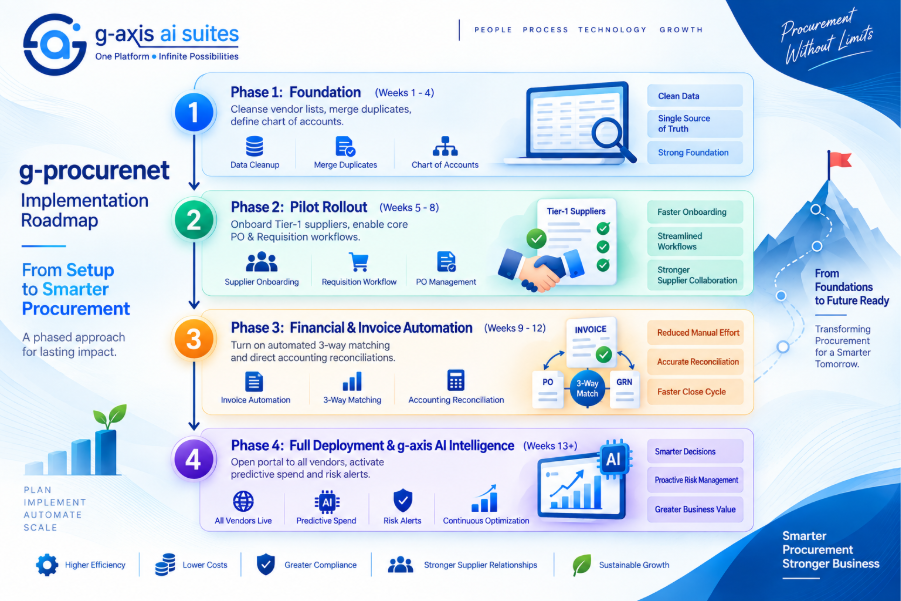
Phase 1: Master Data Cleanse and Normalization (Weeks 1–4)
- Audit legacy vendor records across all accounting systems, spreadsheets, and departmental files.
- Remove duplicate entries, verify current tax credentials, and archive inactive vendors.
- Standardize product taxonomies, service descriptions, and approval thresholds.
Phase 2: Core Workflow and Pilot Supplier Deployment (Weeks 5–8)
- Configure approval hierarchies, legal templates, and department budget allocations within g-procurenet.
- Launch the self-service supplier portal with a pilot group of Tier-1 vendors representing the highest transaction volumes.
- Gather feedback on the supplier portal interface to ensure smooth usability.
Phase 3: Financial Integration and Automated Matching (Weeks 9–12)
- Activate bi-directional synchronization with accounting and banking platforms.
- Turn on automated three-way invoice matching rules and set tolerance thresholds for line-item variations.
- Train accounts payable and warehouse teams on digital goods receipt verification and discrepancy resolution.
Phase 4: Full-Scale Rollout and AI Activation (Weeks 13 and Beyond)
- Onboard remaining supplier tiers across all operating subsidiaries and regional branches.
- Activate the predictive analytics and risk monitoring engines within the g-axis AI suite.
- Review initial spend reports to identify consolidation opportunities, renegotiate volume pricing, and benchmark vendor performance scores.
The Path Forward: Procurement as a Competitive Advantage
Procurement can no longer remain a fragmented back-office administration process. In an interconnected global economy, supply chain resilience, cost control, and compliance require modern, automated tools.
g-procurenet, powered by the g-axis AI suite, provides the operational foundation required to manage the modern vendor lifecycle. By unifying onboarding, contract enforcement, purchase requisitions, automated financial reconciliation, and predictive risk modeling into a single secure platform, it transforms vendor management.
Instead of chasing missing paperwork, resolving invoice disputes, and reacting to supplier delays, procurement teams can use real-time data to protect business margins, mitigate third-party risk, and build resilient, long-term supplier partnerships.